
Arrest History in Newton County
Newton County arrest records begin with the agency that took the person into custody. The Newton County Sheriff’s Office makes arrests and operates the Newton County Detention Center. Covington Police, Oxford Police, Porterdale Police, Georgia State Patrol, and other authorized agencies can also make arrests that lead to a Newton booking. The originating agency keeps its arrest or incident report; the jail keeps the booking and custody record.
An arrest history is a set of event records, not a judgment. It may show an arrest date, initial charge, bond information, transfer, or release. The prosecutor may decline the case or file different counts, and the court may dismiss, acquit, accept a plea, or convict. Older Newton County arrest history is not guaranteed to remain in a current-inmate display, so historical searches often need a records request and court follow-up.
Four Newton County Arrest Record Custodians
The right office depends on which document is needed. A Covington Police arrest report stays with CPD even if the person was booked at the Newton County Detention Center. The sheriff holds its own arrest reports, booking packets, jail logs, and custody details. The Newton Clerk of Courts holds the later accusation, indictment, docket, and disposition. GCIC receives fingerprintable arrest-cycle data and later disposition reports.
| Record needed | Newton County starting point |
|---|---|
| Sheriff incident or arrest report | Newton Sheriff open-records channel |
| City police report | The police department that made the arrest |
| Booking and custody status | Newton Sheriff inmate tool or detention phone |
| Filed charges and final outcome | Newton Clerk of Courts, Room 338 |
How to Look Up Newton County Arrests
No single search covers every Newton County arrest. Use the date, full name, arresting agency, report number, booking number, or court case number to move through this channel-complete sequence.
- Choose Inmate Search on the Newton Sheriff homepage for current or recent custody. If no result appears, call the detention information line at 678-625-1420 because transfers and data timing can affect the display.
- Ask the arresting agency for the initial arrest or incident report. For sheriff records, use the open-records office at 15151 Alcovy Road. For a city arrest, request the originating report from that city police department.
- Check the Newton Clerk of Courts after prosecution begins. A booking number may not match the court case number, but the filed case gives the charges pursued and final result. The full route is described in Newton County criminal court case records.
- Use GCIC’s Georgia Felon Search only for reported Georgia felony convictions, pleas, and sentences. It costs $15 per search and another $15 for each possible record opened. It does not show a fresh arrest or a complete arrest history.
- Submit a narrow Georgia Open Records Act request for a booking face sheet, initial report, charge and bond history, release timestamps, or older jail-log entries when online tools do not answer the question.
Newton Sheriff Booking Record Requests
The Newton Sheriff public-records page identifies the office that receives requests under the Georgia Open Records Act. Its captured page does not post a detailed fee schedule, email address, fax number, or local turnaround promise beyond Georgia law. Give a precise date range and ask for an estimate before authorizing chargeable search, review, or copying.
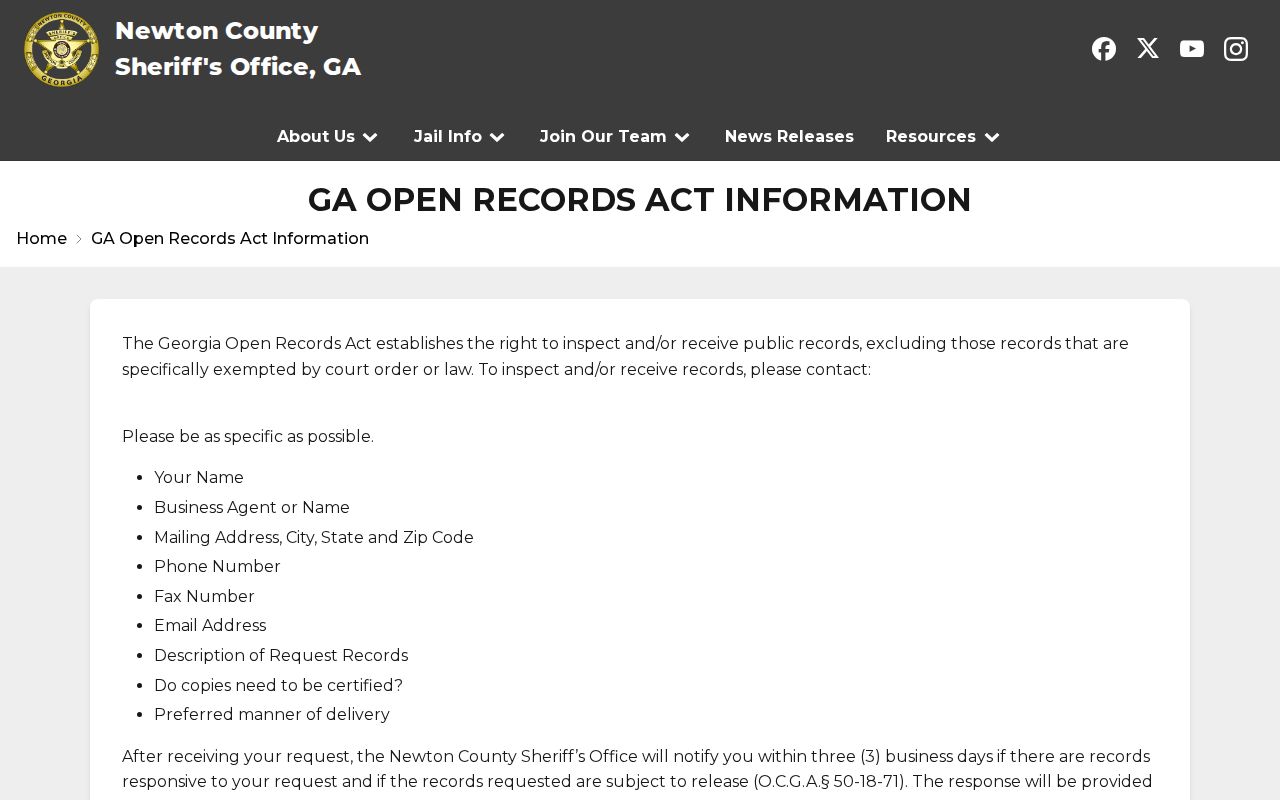
The source page places official Newton County arrest-record requests with the sheriff instead of a commercial booking-photo service.
Newton County Sheriff’s Office
15151 Alcovy Road
Covington, GA 30014
678-625-1403
Monday through Friday, 8 a.m. to 5 p.m.
A useful request names the initial arrest report, booking face sheet, charge and bond history, booking and release timestamps, and releasable jail-log entries. Include the incident or booking number and date when known. Electronic PDF may reduce paper cost, though lawful search and redaction time may still be charged.
Georgia agencies generally must produce available records within a reasonable time not exceeding three business days. If production cannot occur in that window, the response should describe the records and give a timetable. O.C.G.A. § 50-18-71 permits available electronic formats and lawful copying, media, search, retrieval, and redaction charges. O.C.G.A. § 50-18-72 protects specified records, and an open investigation can limit access to investigative material. Initial arrest and incident reports occupy a different access position, so ask for the releasable initial report and segregable portions when a larger file is withheld.
What an Arrest Record Shows
The Newton inmate tool’s vendor fields require live rechecking, so no unverified field is promised. The research identifies the core labels to confirm on a booking entry. Booking time, agency, charge, and bond or custody status are the most useful fields for routing a reader to the right report and court.
| Booking Number | A jail identifier that may differ from the police report number and court case number. |
|---|---|
| Booking Date & Time | When the jail processed custody, which can follow the actual arrest. |
| Arresting Agency | The sheriff, city police, state patrol, or other agency that holds the originating report. |
| Charges | Booking allegations at that moment, not necessarily the counts later filed by the prosecutor. |
| Bond | Amount or status by count when published; “no bond” should be read with the current court order. |
| Mugshot Policy | A booking photograph may be an agency record, but this page republishes no photos. Request releasable material from the custodian. |
| Release Status | Custody status, release, or transfer information; release does not mean acquittal or dismissal. |
From Harland Drive to Alcovy Road
A Covington arrest illustrates Newton County’s split record chain. CPD creates the arrest or incident report at its Harland Drive operation, while the person is booked at the Newton County Detention Center on Alcovy Road. If prosecutors file a case, the clerk at the Judicial Center on Usher Street keeps the docket and disposition. GCIC then depends on arrest-cycle and disposition reporting from those agencies.
CPD accepts open-record requests through evidence@covingtonpolice.com or by mail and operates a customer-service counter at 13183 Harland Drive NE around the clock for routine reports. Its FAQ says to allow 72 hours for incident-report processing. The posted fees are $0.10 per paper page, $3 per CD or DVD, and $5 per 15 minutes of processing. Those CPD charges must not be assumed to apply to sheriff requests.
Recent Arrests and Booking Logs
The Newton Sheriff homepage foregrounds its Inmate Search as the official starting point for people who may be in custody now. The tool is a custody channel, not a complete historical arrest index. A city arrest may not appear at once during transport and intake. An entry can also disappear from a current roster after release or transfer.
When a recent Newton County booking does not appear, call 678-625-1420 and provide a full name and approximate booking date. For an older event, request the booking packet or jail-log entry. Absence from a current list proves neither that an arrest never happened nor that a case was cleared.
Read custody terms with care. “Released” can mean bond, transfer, sentence completion, dismissal, or another court order. A transfer can remove someone from the county display while state custody continues. A temporary “no bond” label may reflect a hold or an order that later changes. Confirm the present status with detention staff and the issuing court instead of treating a roster label as the final case outcome.
Newton Arrest Fingerprints Reach GCIC
The Georgia Crime Information Center is the state repository. For a fingerprintable offense, the arresting agency captures fingerprints and submits an arrest cycle. Prosecutors, courts, and custodial agencies later report the final disposition and incarceration data. Timing or reporting gaps can separate a jail event from its statewide result.
The GCIC source helps explain why Newton booking data and a statewide felony result should be checked as separate stages.
The GBI criminal-history FAQ describes access and record contents for Georgia history information.
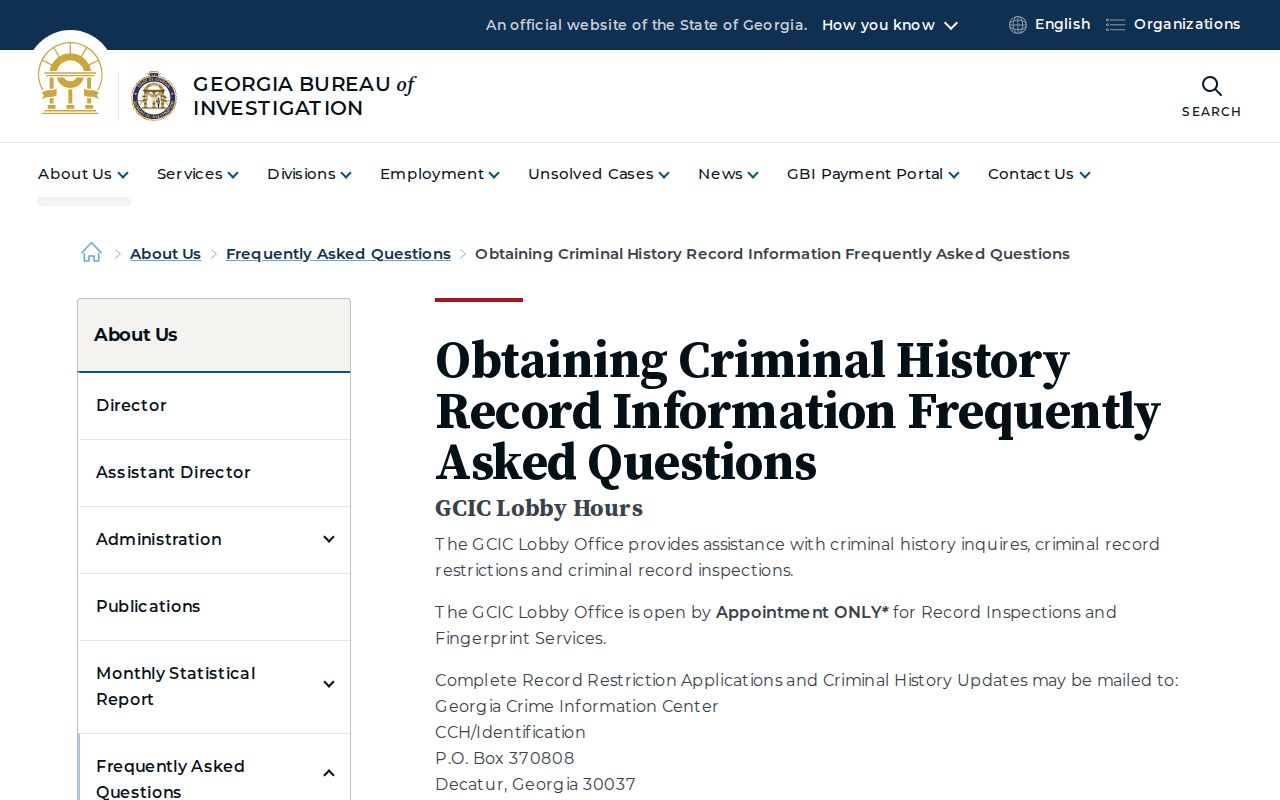
The FAQ reinforces that a fingerprint comparison, not a name match, provides positive identity confirmation.
Arrests vs Convictions
An arrest and a conviction come from different decisions. The arresting agency records custody based on an allegation and the jail books the person. A court conviction exists only after a guilty plea or finding and entry of judgment. Compare the Newton booking with the filed docket and final disposition before drawing a conclusion.
| Arrest Record | Conviction Record |
|---|---|
| Created by the arresting agency and jail | Created and maintained by the court |
| Shows that custody and booking occurred | Shows a finding or plea of guilt |
| Lives with the sheriff, jail, or police agency | Lives with the clerk and may be reported to GCIC |
| May end in release, no filing, dismissal, or acquittal | May lead to sentence, appeal, restriction, or other lawful relief |
Note: A Newton County arrest is not proof of guilt, and many bookings do not end in a conviction.
Why Felon Search Misses Recent Newton Arrests
Georgia’s official Felon Search instructions cover a statewide product built for reported felony conviction information, not yesterday’s Newton County booking.
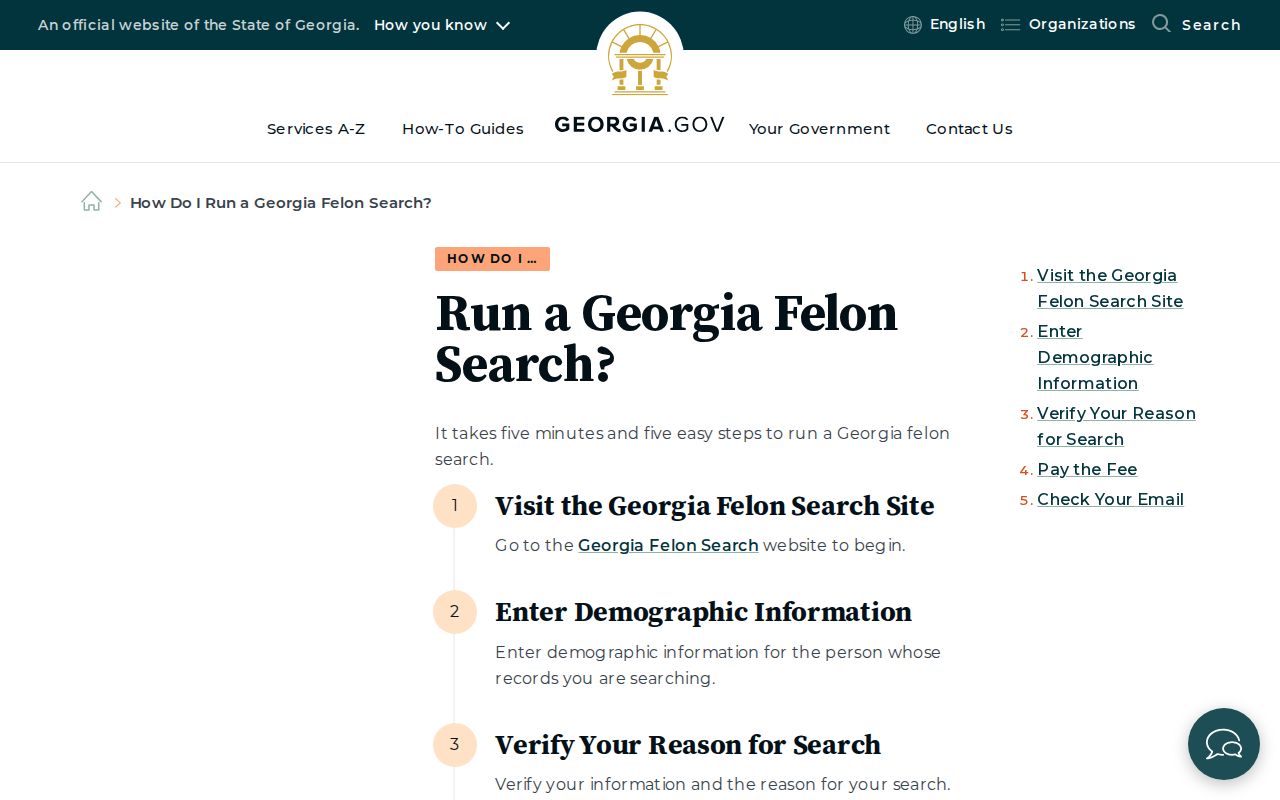
The state walkthrough belongs later in the search chain, after current custody and the Newton court file have been checked.
A paid no-record response may mean no Georgia felony arrest, an arrest without conviction, a dropped or downgraded charge, a missing or processing disposition, or successful First Offender treatment. It does not certify that no Newton County arrest took place. Each possible match opened incurs another $15, and only fingerprints confirm identity.
If a Newton County arrest cycle seems wrong, preserve the portal name, query date, and identifiers. Compare the booking charge with the clerk’s final disposition before asking for correction. For an eligible arrest before July 2013, the research routes restriction paperwork through the arresting agency. For later arrests, the prosecutor is the usual starting point under Georgia’s record-restriction process. “Restricted” does not mean destroyed; it limits qualifying noncriminal-justice disclosure while keeping authorized criminal-justice and judicial access.