
Criminal Cases in Newton County Courts
Newton County belongs to the Alcovy Judicial Circuit in Georgia's Tenth Judicial District. Superior Court is the general-jurisdiction felony trial court. Magistrate Court handles warrants, first appearances, and preliminary functions. Probate Court has specified traffic and misdemeanor authority. Juvenile Court holds confidential youth matters, while Covington, Oxford, and Porterdale municipal courts retain their city ordinance and citation dockets.
The Georgia Superior Court Clerks' Cooperative Authority listing identifies Newton's clerk and the courts that office manages.
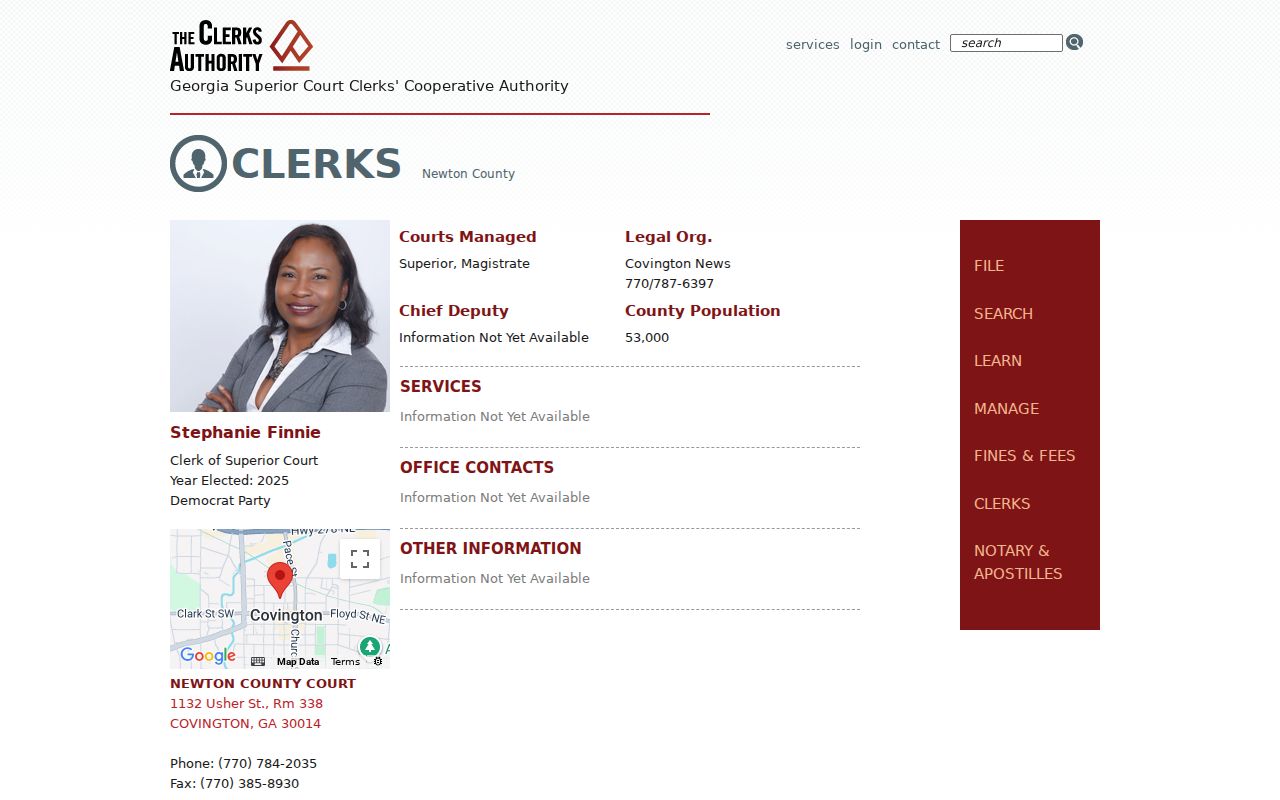
The Newton clerk is the custodian of the filed case, not the sheriff's jail. An arrest report can explain the initial enforcement action, but the court docket shows the prosecutor's filed counts and the judge's final orders.
Newton Criminal Courts Under One Roof
The Judge Horace J. Johnson, Jr. Judicial Center at 1132 Usher Street places several Newton County criminal court functions in one building. Magistrate, Probate, and Juvenile Courts are on the first floor. Superior Court courtrooms and chambers are on the second. The District Attorney and Clerk of Superior Courts are on the third.
That layout gives a practical route through a case. A first appearance may begin downstairs, a felony hearing can occur on the second floor, and the docket or certified disposition comes from Room 338 on the third. The building posts weekday hours from 8 a.m. to 5 p.m.; the clerk's public counter closes at 4:45 p.m. Call 770-784-2035 before travel when archive retrieval or certification may be needed.
How to Search Newton County Case Records
Georgia does not offer one complete, free statewide trial-court criminal database. Newton County criminal court case access runs through the clerk counter, phone and fax channels, available public resources, and the clerk's eCertification service. A case number is the best key. If it is unknown, provide a full name, approximate filing year, court, and date of birth if the clerk permits that identifier.
- Identify whether the matter belongs to Superior, Magistrate, Probate, Juvenile, or a city municipal court.
- Use the exact case or citation number when known; otherwise ask for a party-name search.
- Narrow the request by filing year, court, case type, and lawful identifying details.
- Read the docket in date order, then identify the specific filing or order needed.
- Ask the clerk about inspection, ordinary copies, certified copies, archive retrieval, and a fee estimate.
| Search field | Format | Best use | Access note |
|---|---|---|---|
| Party name | Text | Find a file when the case number is unknown | Common names need more context |
| Case number | Exact text | Most direct court lookup | Do not substitute a booking number |
| Court and case type | Choice or clerk request | Separates felony, lower-court, and city matters | Availability varies by interface |
| Filing date range | Date range | Narrows archived and same-name cases | Use an approximate year if needed |
| Status or attorney | Filter if offered | Refines a broad result set | Confirm live controls with the clerk |
Note: The research did not expose a safe, non-identifying live Newton terminal sample, so exact interface controls require clerk confirmation.
Newton eCertification Has Limits
The Alcovy Clerk announced 24-hour eCertification for certified Court and Real Estate Records. It can reduce a trip for documents that the service makes available. It does not prove that every criminal filing is indexed online or that every docket entry has a downloadable image. Registration, payment, document coverage, and certification price must be checked inside the service.
The GBI record restriction source is assigned to this court page and is shown below.
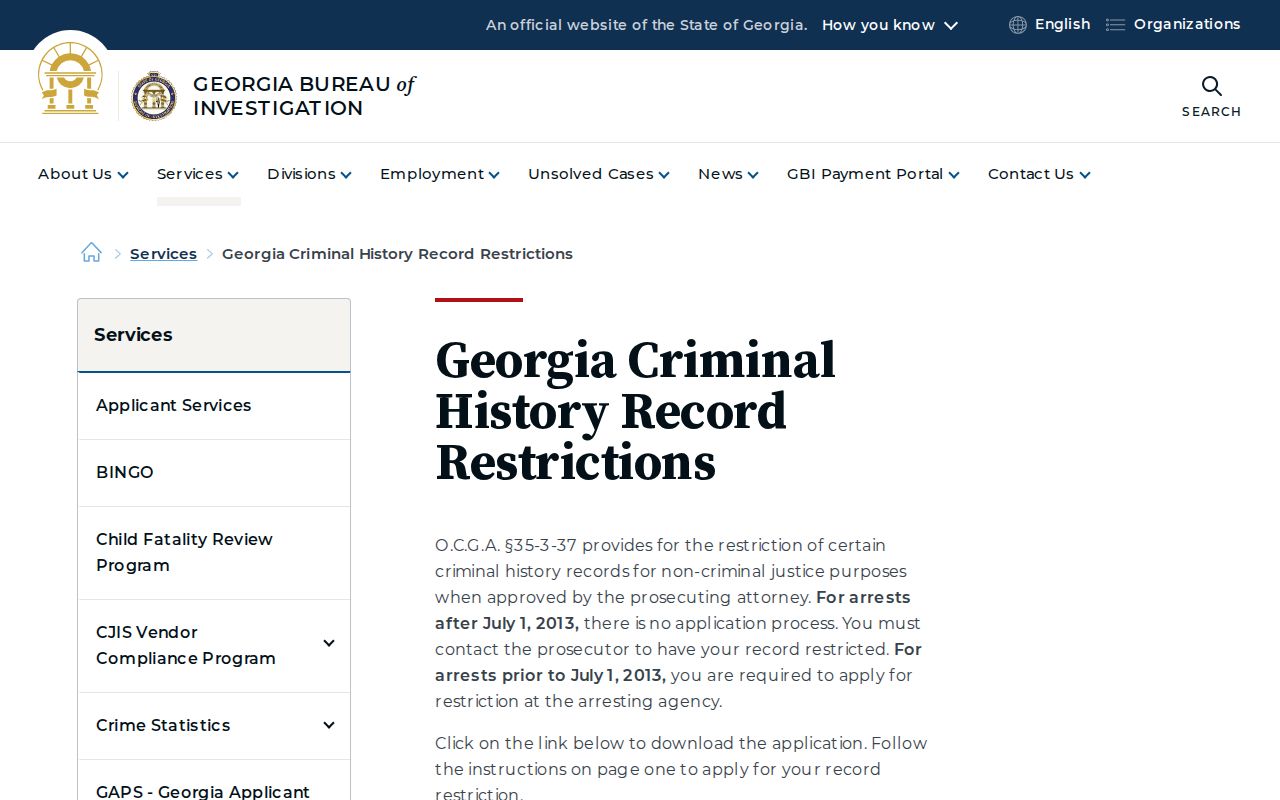
Restriction can explain why an expected public result is absent, but the clerk, prosecutor, and GCIC have different roles. Ask the clerk about the court disposition or sealing order. Ask GCIC about one's own state history after the court record is correct.
What the Case File Shows
A Newton County criminal case file follows the court's work from charging through judgment. The docket is an index of events. Pleadings and orders are the underlying documents. A line that says “Indictment Filed” does not necessarily display the indictment text, and a jail release line does not replace the final court disposition.
| Case number and court | The court's controlling identifier, division, filing date, assigned judge, and status. |
|---|---|
| Charging document | Accusation or indictment counts, statutes, and severity as filed by the prosecutor. |
| Docket entries | Dated metadata for filings, service, motions, calendars, orders, and other events. |
| Hearing dates | Arraignment, motion, plea, trial, sentencing, and revocation settings when public. |
| Disposition and judgment | Dismissal, nolle prosequi, plea, verdict, dead docket, or other final action. |
| Sentence and conditions | Custody, probation, fines, and conditions contained in the sentencing order. |
Sensitive identifiers, victim details, sealed filings, restricted data, and juvenile material may be omitted or redacted. A certified final disposition is usually the soundest proof of how the filed case ended.
Read Newton Criminal Dockets in Sequence
Docket words can be brief. “Arraignment” is the stage when the filed charge is read or waived and a plea is entered. “Nolle prosequi” means the prosecutor chose not to proceed on that count at that time. “Dead docket” pauses a case without the same meaning as an acquittal. “Disposed” means the court entered an ending action at that level; it does not prove that every appeal, fine, or probation duty is complete.
- Accusation or indictment
- The formal charging paper filed in court.
- Docket entry
- A dated index note about a filing or event, not always the full document.
- Disposition
- The court or prosecutor's outcome for a count or case.
- First Offender
- A statutory Georgia pathway whose successful completion can affect public release.
Compare each count separately. Arrest charges, indictment counts, plea counts, and conviction counts may differ without being errors.
Stages of a Criminal Case
A Newton County felony often starts with an arrest or investigation, but the court file takes shape when the prosecutor files an accusation or seeks an indictment. Arraignment records the plea. Pretrial work can add discovery issues, motions, bond orders, and calendars. The matter then ends through dismissal, negotiated plea, or trial, followed by judgment and sentencing when there is a conviction.
Case flow: Charges Filed › Arraignment › Pretrial › Plea or Trial › Disposition › Sentencing
Magistrate events may precede the Superior Court felony file. A city citation can remain in municipal court unless a warrant arrest, transfer, or felony prosecution creates a Newton County criminal court record elsewhere.
Copies, Certification and Newton Fees
Newton County's open-record page routes court documents to the applicable clerk and cites statutory clerk fees under O.C.G.A. § 15-6-77. It does not publish one simple price that applies to every requested criminal document. Ask for the cost of inspection, an ordinary copy, a certified copy, and any archive retrieval before placing an order.
State the exact item. “All records” can be costly and may not identify what proves the result. A request for the docket, final disposition, sentencing order, or bond order is easier to route. Include the defendant, court, case number, and approximate year. The clerk's public counter, phone at 770-784-2035, and fax at 770-788-3717 provide alternatives when online access is incomplete.
Access and Restrictions
Georgia law favors access to public court and agency records, but access has boundaries. The Georgia Open Records Act covers agency records and sets a three-business-day response framework when records are available. Court files also follow judicial record procedures and clerk fee law. Juvenile matters are confidential. Sealed or restricted records, protected personal data, victim information, and certain sensitive filings do not appear in ordinary public access.
The Georgia Attorney General's Open Records Act gateway appears in the assigned image below.
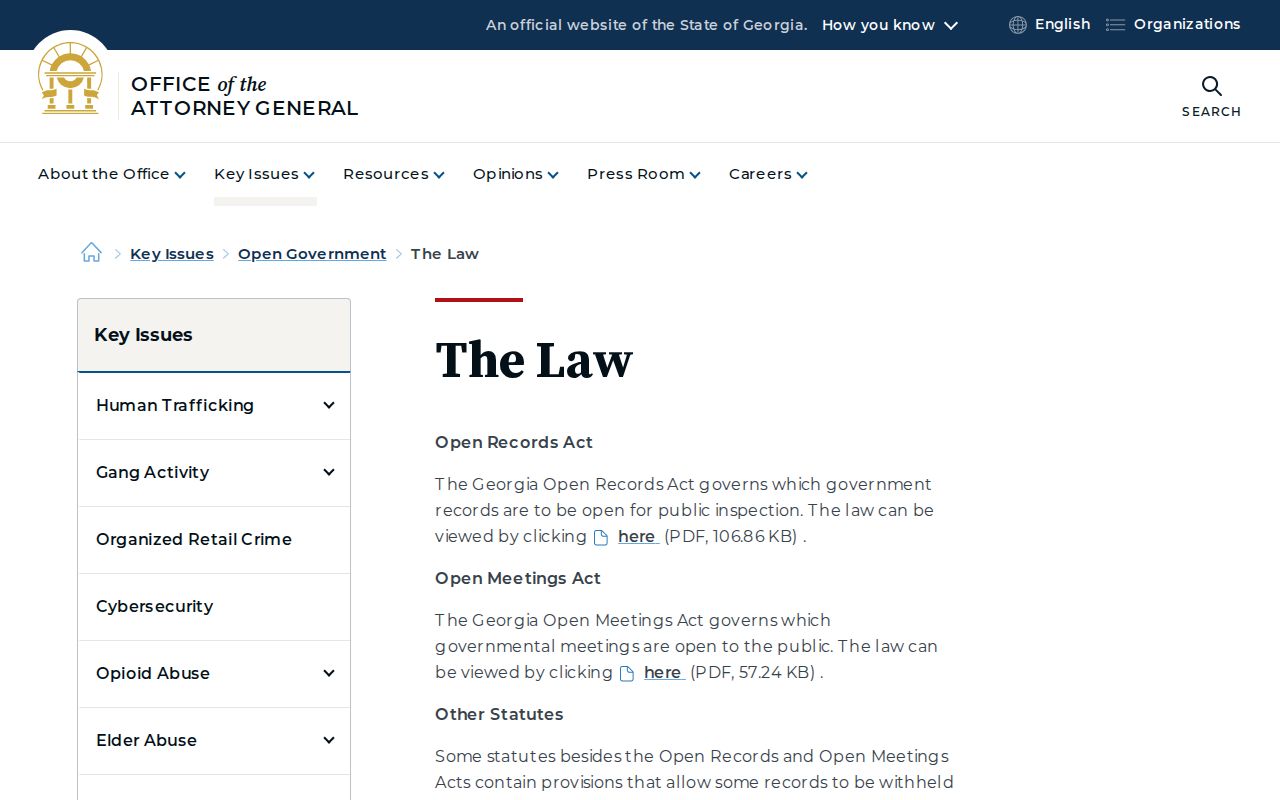
Ask the office to cite the legal basis for a withholding and release any segregable public portion. Do not treat a missing online result as proof that no case exists.
Newton Court Access Escalation
When a Newton County criminal court record cannot be found, first verify the issuing court and identifier. Next, ask whether the file is archived, sealed, restricted, transferred, or still too new to index. If a disposition is missing from one's GCIC history, obtain the court's final order and ask the court about transmitting the correct result.
The Attorney General's open-government FAQ is the source shown here.
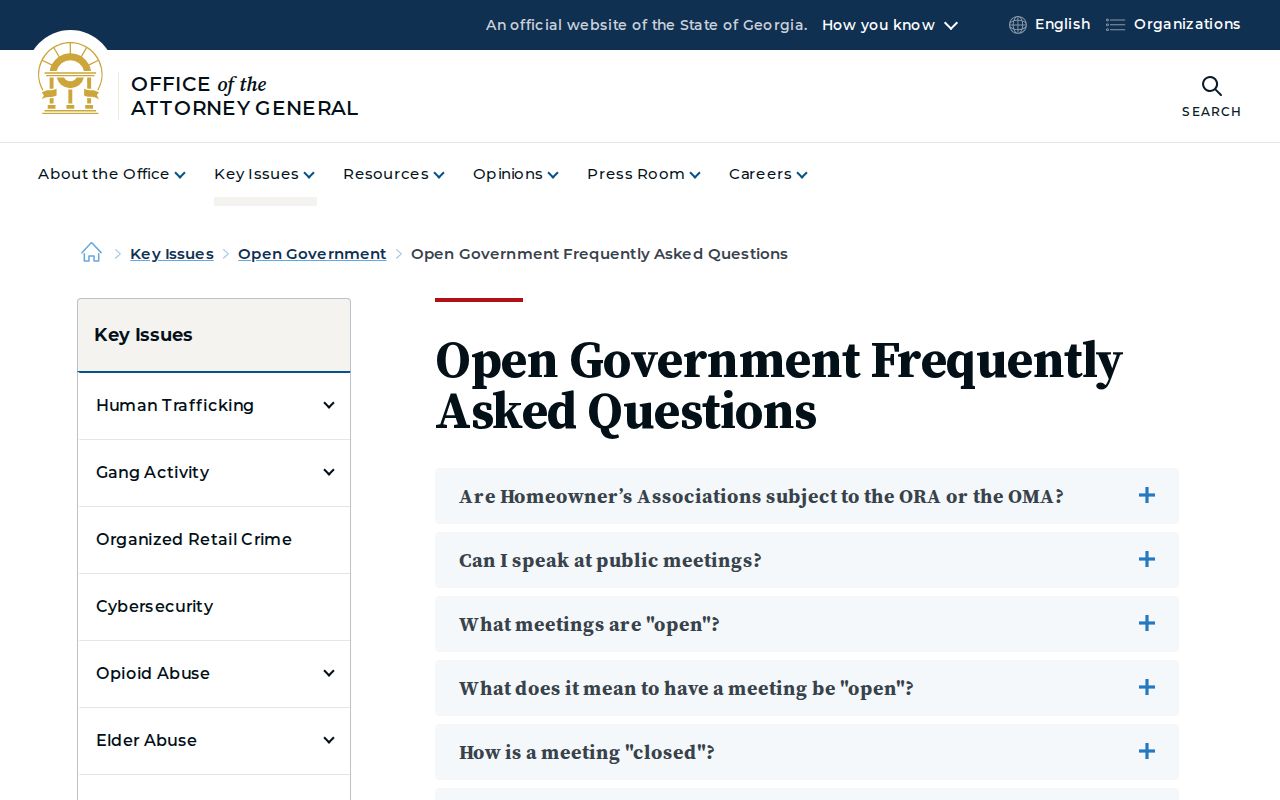
Narrowing the date range and naming the exact document often resolves a stalled request faster than a broad demand.
Federal Cases Outside Newton Courts
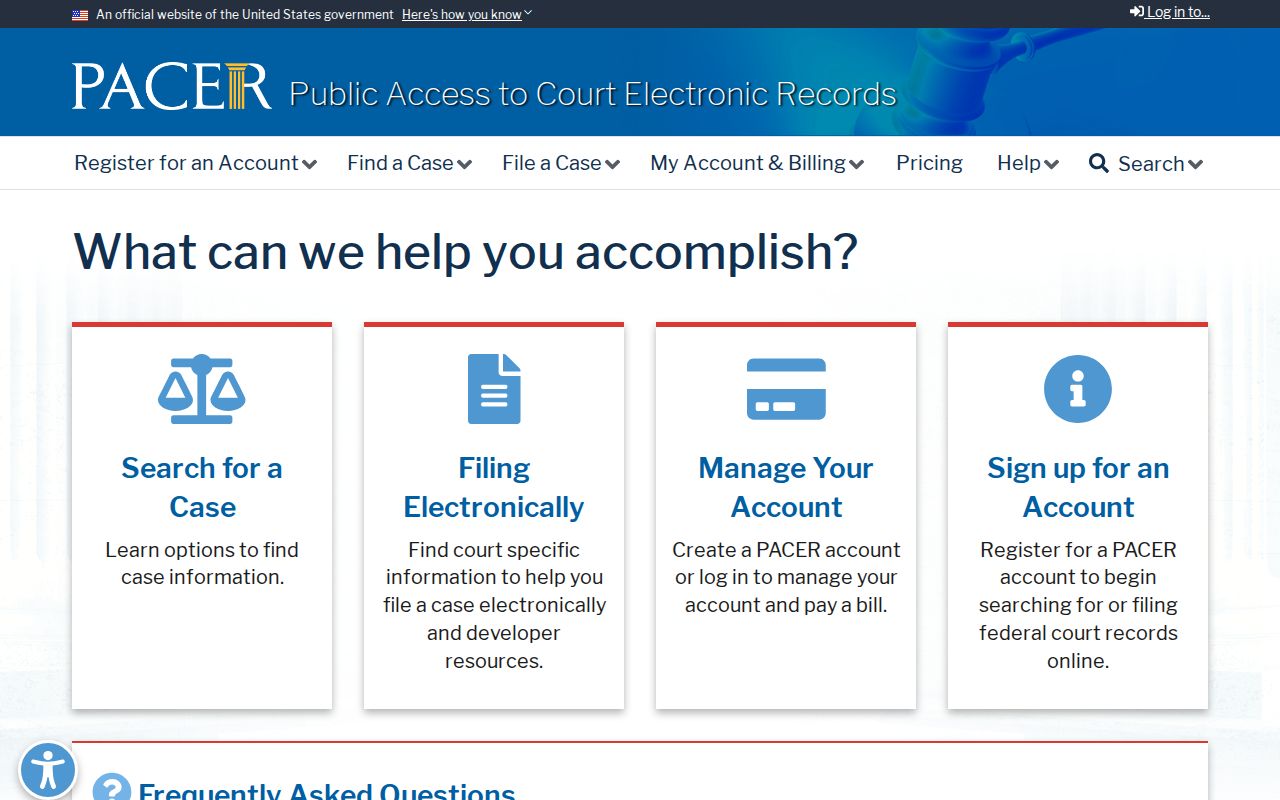
Federal criminal cases are not kept by the Newton clerk. Newton County lies in the Northern District of Georgia. Federal dockets and filings route through PACER, which requires registration and applies federal judiciary fees subject to its current rules.
The official PACER gateway appears in the assigned court-record image below.
A county case number will not necessarily locate a federal matter. Use the federal court's own docket and clerk for authoritative status.